
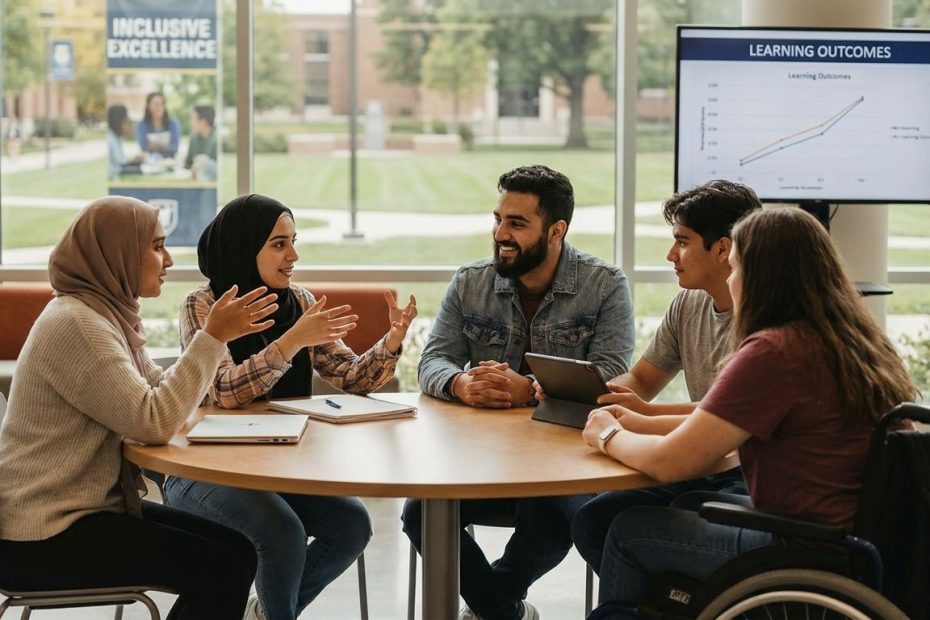
Diversity in higher education leads to better outcomes because it improves learning quality, strengthens student belonging, builds career-ready skills, and prepares you to work with people who do not think, communicate, or solve problems exactly the way you do.
When a college brings together students from different racial, ethnic, economic, geographic, cultural, religious, age, disability, veteran, and first-generation backgrounds, the classroom becomes more realistic and more demanding in the best sense. You learn to defend ideas, revise assumptions, collaborate with unfamiliar peers, and build the social intelligence employers expect from graduates.
This article explains why diversity matters, how it improves academic and career outcomes, what types of diversity count, why belonging changes retention, and how colleges can turn diversity from a statistic into measurable student success.
Why Is Diversity Important In Higher Education?
Diversity is important in higher education because college is one of the few places where you are expected to learn with people whose lives may look very different from yours. That contact matters because higher education does more than deliver course content; it shapes how you reason, communicate, lead, and participate in public life. A diverse campus gives you regular practice working across difference before you enter workplaces, graduate programs, civic groups, and professional networks.
The student body in the United States no longer reflects a narrow profile. National Center for Education Statistics data show that degree-granting postsecondary institutions enroll students across many racial and ethnic groups, with White students representing just over half of United States resident enrollment and Hispanic, Black, Asian, American Indian, Alaska Native, Pacific Islander, Native Hawaiian, and multiracial students making up a large share of the remaining enrollment. That shift changes how colleges teach, advise, support, and prepare students for the world outside campus.
From an institutional leadership view, diversity strengthens academic quality when it is connected to real interaction. A diverse college that leaves students isolated in separate social circles loses much of the benefit. A diverse college that builds strong classrooms, peer learning, advising, mentoring, and respectful debate turns student difference into stronger reasoning, better persistence, and better preparation for professional life.
You should also separate diversity from branding. A college may publish attractive demographic numbers, yet the real measure is whether students feel seen, challenged, supported, and expected to perform. Better outcomes come from the combination of access, academic rigor, belonging, and meaningful contact across groups.
How Does Diversity Improve Learning And Critical Thinking?
Diversity improves learning by forcing you to test ideas against lived experiences, evidence, and questions that may not appear in a more uniform classroom. When classmates bring different family histories, regions, languages, income backgrounds, military service, religious traditions, disability experiences, or first-generation college experiences, class discussion becomes less predictable. That unpredictability pushes you to listen carefully, refine claims, and make stronger arguments.
Research on undergraduate diversity experiences supports this point. A study summarized by RTI International examined two samples of incoming law students and found positive relationships between classroom diversity, contact diversity, and educational outcomes. The practical lesson is direct: the benefit comes from learning with diverse peers and engaging with them through coursework, discussion, and informal interaction.
A natural experiment involving first-year college students in a required writing course found that greater racial diversity in discussion groups was associated with stronger academic outcomes, including higher grade point average at graduation. That finding matters because writing courses rely on argument, feedback, evidence, and revision. In that kind of classroom, diverse viewpoints can make weak reasoning easier to spot and stronger reasoning easier to build.
Critical thinking grows when you encounter serious disagreement without retreating from the work. You learn to ask better questions, identify assumptions, interpret information more carefully, and explain your position in language others can understand. Those skills do not come from comfort alone; they come from structured exposure, clear academic expectations, and instructors who know how to guide demanding conversations.
Good colleges do not leave this to chance. They assign mixed teams, create discussion norms, use varied course materials, assess participation with care, and train faculty to manage disagreement without lowering standards. When those pieces are in place, diversity becomes a direct contributor to intellectual growth.
Does Diversity In College Improve Grades, Graduation, And Career Outcomes?
Diversity can improve grades, persistence, and career outcomes when colleges support students well and create real cross-group learning. The best answer is precise: diversity alone does not automatically improve every outcome for every student, but diverse learning environments backed by strong teaching and belonging practices are linked to better academic and professional results. That is the claim the evidence can support.
A meta-analysis of diversity courses found a small positive relationship between diversity coursework and student outcomes across many studies. That finding matters because structured courses can help students turn exposure into learning. You gain more when difference is tied to assignments, reflection, discussion, evidence, and measurable academic goals.
Belonging also affects persistence. A randomized intervention at a broad-access university found that a customized belonging activity improved continuous enrollment for racial-ethnic minority and first-generation students. The mechanism was practical: students developed a stronger sense of social and academic fit, which helped them stay enrolled and keep moving toward completion.
Career outcomes are gaining more attention as well. A Nature policy brief on business and law schools reported that higher racial diversity was associated with higher median salary at graduation across large datasets from Master of Business Administration and Juris Doctor programs. Salary is only one career measure, yet it points to a wider idea: diverse cohorts can expand networks, sharpen collaboration, and strengthen professional readiness.
Employers keep asking for the same core abilities from graduates: communication, teamwork, professionalism, and critical thinking. Diverse campuses help you practice those abilities with people who may not share your assumptions, vocabulary, culture, or problem-solving style. That practice has direct value in interviews, internships, client work, leadership roles, and cross-functional teams.
You should read the research with discipline. Some studies find stronger effects than others, and outcomes depend on course design, peer interaction, campus climate, support services, and student engagement. The strongest claim is not that diversity fixes every academic problem; the strongest claim is that diversity improves the conditions for learning when colleges convert it into high-quality educational practice.
How Does Campus Diversity Benefit All Students?
Campus diversity benefits all students because every graduate enters a world where collaboration across difference is normal. You may work with colleagues from different regions, cultures, languages, income backgrounds, abilities, ages, religious traditions, and political views. College gives you a lower-risk place to build the habits required for that reality.
For underrepresented students, diversity can strengthen belonging, reduce isolation, and improve access to peer and mentor networks. For students from majority backgrounds, diversity can widen social experience, challenge assumptions, and build skill in communicating with people whose path through life has been different. Both gains matter because education is partly about intellectual development and partly about readiness to function well with others.
The benefit is especially strong when students do more than sit in the same lecture hall. You need shared projects, lab groups, writing workshops, residence life, student organizations, advising relationships, and class discussions that create meaningful contact. Passive exposure has limited value; structured interaction builds the durable skills.
This is where many families and students misread diversity. They treat it as a comfort question only: “Will there be people like me?” That question is valid, especially for students concerned about belonging. Yet another question deserves equal weight: “Will this college help me work well with people unlike me?”
A campus with strong diversity and weak support can still fail students. A campus with moderate diversity and excellent teaching, advising, and community-building may produce better outcomes than its numbers suggest. The best institutions focus on the student experience behind the data.
When you evaluate a college, look for proof that diversity is part of academic life. Review course offerings, student retention data, advising programs, transfer support, first-generation student resources, faculty development, internship access, and campus climate reporting. Those signals tell you whether diversity is treated as an educational asset or a brochure line.
What Types Of Diversity Matter In College Besides Race?
Race and ethnicity matter in higher education, but they do not capture the full range of student difference. Socioeconomic background, first-generation college status, disability, geography, age, religion, language, family responsibilities, veteran status, immigration background, and viewpoint diversity also shape how students experience college. Each form of diversity affects classroom participation, support needs, peer relationships, and career preparation.
Socioeconomic diversity deserves special attention because income and wealth shape access long before a student reaches college. Students from lower-income families may face gaps in academic preparation, advising, technology, transportation, housing stability, unpaid internship access, and professional networking. When colleges recruit these students without giving them strong support, the institution creates access without enough completion power.
First-generation students often bring strong motivation and practical resilience, yet they may not have family guidance on office hours, financial aid, course sequencing, internships, graduate school, or professional etiquette. A college that serves first-generation students well explains hidden rules early and often. That kind of support improves outcomes without lowering academic expectations.
Geographic diversity also matters. A student from a rural county, a large city, a tribal community, a military family, or an international school may interpret campus life differently. When those students work together, they add detail to discussions about health care, education, infrastructure, labor markets, public policy, business, technology, and community life.
Disability diversity shapes learning environments in powerful ways. Accessible course design, flexible participation methods, assistive technology, captioning, clear deadlines, and strong student support services often help more students than the group originally targeted. When colleges design for access, they usually improve clarity and organization across the classroom.
Viewpoint diversity also belongs in the conversation. Students should encounter differing political, philosophical, economic, and social views in a setting governed by evidence and respect. A mature academic environment protects inquiry, expects reasoned argument, and does not confuse disagreement with harm.
Does Diversity Lower Academic Standards Or Conflict With Merit?
Diversity does not need to lower academic standards, and it should never be used as a substitute for academic quality. Strong institutions set clear expectations, admit students who can succeed with appropriate support, and measure outcomes honestly. The goal is to expand opportunity and strengthen learning, not to weaken rigor.
The concern about merit appears often in public discussion because admissions decisions feel personal and competitive. Students and families want to know whether seats are awarded fairly, whether academic preparation still matters, and whether graduates will be respected. Those questions deserve direct answers rather than slogans.
Merit in higher education has always included more than test scores and grades. Academic record matters, but colleges also assess course rigor, writing ability, leadership, persistence, work responsibilities, service, creativity, talent, recommendations, and the conditions under which a student achieved. A student who excelled with fewer resources may bring strong ability that a narrow metric misses.
The legal environment has also changed for admissions. The Supreme Court ruled that the race-conscious admissions programs at Harvard and the University of North Carolina violated the Equal Protection Clause of the Fourteenth Amendment. Colleges must now pursue lawful ways to build strong classes, support access, and improve educational outcomes.
That ruling does not erase the educational value of diverse learning environments. It changes how institutions may make admissions decisions, especially regarding race. Colleges can still strengthen socioeconomic access, recruit widely, improve transfer pathways, support rural and first-generation students, invest in need-based aid, reduce barriers, and create inclusive classrooms.
The practical standard is simple: keep expectations high and support students early. Academic rigor and student support should move together. When colleges make courses easier to avoid failure, they weaken trust; when they maintain strong standards and provide advising, tutoring, mentoring, and belonging support, they improve completion without diluting the degree.
What Can Colleges Do To Improve Outcomes Through Diversity?
Colleges improve outcomes through diversity by designing for interaction, belonging, and performance. Recruitment matters, but the work cannot stop at admission. The real test begins after students enroll, choose courses, meet faculty, join peer groups, face academic pressure, and start planning careers.
Strong colleges build diverse academic teams with care. They train faculty to lead discussion, manage conflict, use varied course materials, assess student work fairly, and create participation models that do not reward only the loudest voices. They also use data to identify where students are struggling and act before small barriers become stop-out risks.
Belonging interventions can be useful because many students interpret normal academic difficulty as proof they do not fit. A well-designed message can help students understand that uncertainty is common and temporary. When paired with advising, peer connection, and academic support, that message can help students stay engaged.
Colleges should also connect diversity to career readiness. Career services teams can help students describe cross-cultural teamwork, conflict resolution, group projects, community engagement, research, leadership, and communication skills in language employers recognize. Students need to show what they can do, not merely list personal qualities.
Transfer pathways deserve more attention. Community colleges educate many students from lower-income, working adult, first-generation, and racially diverse backgrounds. Four-year institutions that build smooth transfer credit systems, clear advising maps, and strong financial support can expand opportunity and improve bachelor’s degree completion.
Measurement keeps the work honest. Colleges should track retention, completion, course success, belonging, advising use, internship access, graduate school placement, and employment outcomes across student groups. If a campus claims diversity improves outcomes, leaders must be willing to show where it is working and where students still need stronger support.
Why Does Belonging Matter As Much As Representation?
Representation tells you who is present; belonging tells you whether students can participate, persist, and perform. A student may enroll at a diverse college and still feel isolated if classrooms, advising, residence life, or peer networks do not create real connection. Outcomes improve when students believe they are legitimate members of the academic community.
Belonging does not mean removing difficulty. College should remain demanding. It means students can face difficulty without assuming they are alone, unwelcome, or incapable.
This distinction matters for first-year students, transfer students, first-generation students, adult learners, veterans, students with disabilities, and students from underrepresented racial or ethnic groups. Many capable students leave college because academic pressure combines with social disconnection, financial strain, or unclear guidance. A stronger belonging climate helps students ask for help earlier and use resources without stigma.
Faculty play a central role. Clear syllabi, transparent grading, accessible office hours, timely feedback, varied materials, and respectful discussion norms all send signals about who belongs. Those practices raise the quality of instruction for the whole class.
Peer networks matter as well. Study groups, learning communities, mentoring programs, student organizations, research teams, and cohort models help students turn a large institution into a navigable community. Those connections often determine whether a student recovers from a poor exam, changes study habits, or finds a new academic path.
When belonging is done well, students do not receive a pass around standards. They receive clearer paths into the standards. That is one of the most practical ways diversity leads to better outcomes for everyone.
Why Does Diversity In Higher Education Improve Outcomes?
- Diversity improves learning through stronger discussion and peer challenge.
- It builds belonging, retention, and persistence.
- It strengthens communication, teamwork, and critical thinking.
- It prepares you for diverse workplaces and civic life.
Turn Diversity Into Better Learning, Not Just Better Numbers
Diversity in higher education produces better outcomes when colleges connect representation with rigorous teaching, meaningful interaction, strong belonging, and career preparation. You benefit when classmates bring different experiences into the room and the institution gives everyone clear expectations, support, and chances to contribute. The strongest evidence points to learning gains, persistence benefits, and career readiness advantages when diversity is built into academic life rather than treated as a slogan. If you are choosing a college, leading a campus program, or advising students, look beyond enrollment statistics and ask how the institution turns difference into better thinking, stronger completion, and better preparation for work. The colleges that do this well help students leave with more than a credential; they help students leave with the judgment, adaptability, and people skills needed to succeed.
References
- Purdue Global: Why Diversity In Colleges And Universities Matters
- National Center For Education Statistics: Fall Enrollment By Race And Ethnicity
- RTI International: Does Diversity At Undergraduate Institutions Influence Student Outcomes?
- Social Science Research Network: Does Racial Diversity Improve Academic Outcomes?
- Nature: Higher Racial Diversity In United States Business And Law Schools Is Linked To Higher Graduate Salaries
- University Of Iowa: Do Diversity Courses Improve College Student Outcomes?
- National Library Of Medicine: A Customized Belonging Intervention Improves Retention
- Stanford Center On Adolescence: Effects Of College Diversity Experiences On Student Outcomes
- National Association Of Colleges And Employers: Employers Say New Graduates Are Largely Prepared For Work
- Legal Information Institute: Students For Fair Admissions, Inc. V. President And Fellows Of Harvard College